


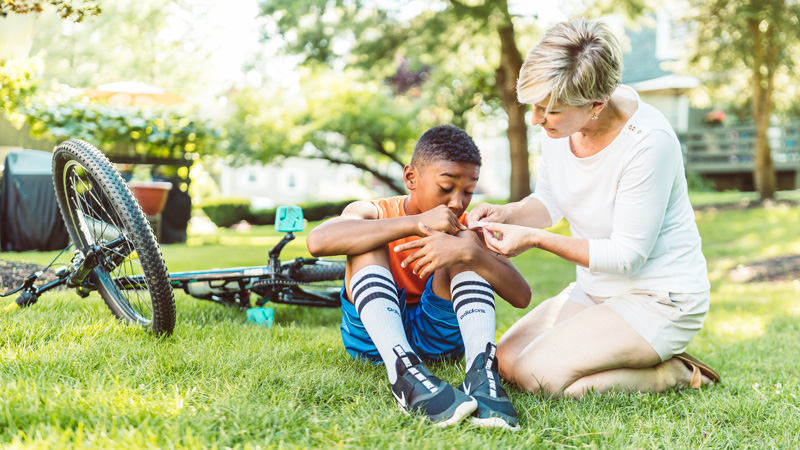
We have all heard it. Perhaps it was a parent, a school nurse, or a coach who told you, “Take that bandage off and let the wound breathe,” or “It needs to scab over to heal.” For generations, this has been the gold standard of layperson first aid. We view the formation of a hard, crusty scab as a sign of progress—a biological shield indicating that the healing process is well underway.
However, modern medical science tells a very different story. The advice to “let it air out” is not just outdated; it is physiologically counterproductive. Current research confirms that allowing a wound to dry out and form a scab actually slows down the healing process, increases the likelihood of scarring, and raises the risk of infection. By understanding the science of moist wound healing, we can revolutionize how we treat everything from minor scrapes to significant surgical incisions.
The Biology of a Scab: Nature’s Band-Aid or a Roadblock?
To understand why we should avoid scabs, we must first understand what they are.
What Exactly Is a Scab?
When you break the skin, your body immediately goes into damage control. Platelets rush to the site to clot the blood and stop the bleeding. As this clot dries out upon exposure to the air, it hardens into a crust composed of dried blood, serum, and dead cells. This is a scab.
While a scab does provide a rudimentary barrier against external dirt, it is a primitive solution. Think of a scab not as a bridge, but as a roadblock. It is a messy pile of debris that your body eventually has to work very hard to dismantle.
The Hidden Problem with Dry Healing
When a wound dries out, the cells required to rebuild the tissue—specifically the keratinocytes—die. This creates a layer of necrotic (dead) tissue. For healing to occur, new skin cells must navigate under this dry, hard crust to close the wound. This forces the body to expend energy breaking down the scab from the bottom up, effectively doubling the workload. Furthermore, a dry environment promotes inflammation, which is a precursor to significant scarring.
The Historical Pivot: Dr. George D. Winter’s Breakthrough
Why did we believe in dry healing for so long? Until the mid-20th century, we simply didn’t know better. The paradigm shift occurred in 1962, thanks to the work of Dr. George D. Winter.
The 1962 Pig Study That Changed Medicine
Dr. Winter published a landmark paper in the journal Nature titled “Formation of the Scab and the Rate of Epithelization of Superficial Wounds in the Skin of the Young Domestic Pig.” In this study, he compared wounds that were allowed to dry out with wounds that were covered with a polythene film (keeping them moist).
The results were staggering. The wounds kept in a moist environment healed twice as fast as those left to dry. This discovery launched the modern era of advanced wound care, moving us away from simple gauze (which dries out wounds) toward occlusive and semi-occlusive dressings that mimic the skin’s natural moisture barrier.
The Cellular Mechanics: How Moist Healing Works
Why exactly does moisture speed up the process? It comes down to cellular behavior.
Accelerating Epithelialization (Cell Migration)
The primary goal of wound healing is epithelialization: the process where new skin cells (keratinocytes) travel across the wound bed to close the gap. These cells require a viable, hydrated surface to migrate.
The “Ice Rink” Analogy: Skating vs. Climbing
Imagine you are trying to cross a frozen lake. If the ice is smooth (a moist wound bed), you can skate across quickly and efficiently.
Now, imagine that same lake is covered in jagged boulders, fallen trees, and debris (a hard scab). To get to the other side, you have to crawl under the debris or climb painstakingly over it. This is what dry healing does to your cells. In a moist environment, cells can “skate” across the wound bed horizontally. In a dry environment, they are forced to burrow deep beneath the scab to find a moist layer where they can survive, drastically lengthening the path they must travel.
The Role of Angiogenesis and Collagen
Moisture also facilitates angiogenesis, the formation of new blood vessels. A hypoxic (low oxygen) gradient established by occlusive dressings can actually stimulate the growth of these vessels, ensuring the new tissue gets the oxygen and nutrients it needs. Furthermore, a moist environment supports the synthesis of collagen, the structural protein necessary for skin strength, ensuring the new tissue is robust rather than brittle.
Autolytic Debridement: Self-Cleaning Wounds
Our bodies have a natural cleaning mechanism called autolytic debridement. The body produces enzymes that break down dead tissue and debris. These enzymes only function correctly in a moist environment. By keeping the wound hydrated, you allow the body’s natural fluids to liquefy dead tissue and wash it away without damaging the healthy new cells forming underneath.
Major Benefits of Maintaining a Moist Wound Environment
The science translates into tangible benefits for anyone suffering from an injury.
Up to 50% Faster Healing Speeds
Clinical studies following Winter’s initial research have consistently shown that moist wounds re-epithelialize 30% to 50% faster than dry wounds. For a minor abrasion, this could mean the difference between a wound lasting a week versus just three or four days.
The Aesthetic Advantage: Reduced Scarring
Scarring is often the result of prolonged inflammation. Because moist healing reduces inflammation and prevents the formation of a hard crust that depresses the new tissue, the resulting skin is smoother. There is less collagen disorganization, meaning the new skin blends better with the surrounding tissue. If you are concerned about cosmetic outcomes, preventing a scab is the single best thing you can do.
Pain Management and Nerve Protection
Have you ever bumped a dry scab? It hurts. Scabs pull on the healthy skin around them, creating tension. Additionally, drying out nerve endings in the wound bed causes significant pain. A moist dressing covers and hydrates these nerve endings, providing immediate pain relief. It acts as an insulator, protecting the raw nerve endings from the air and temperature changes.
Addressing the Fear of Infection
Does Moisture Breed Bacteria?
A common counter-argument is that “bacteria love moisture,” leading people to fear that covering a wound will cause infection. While it is true that bacteria thrive in wet environments, modern wound dressings are designed to be semi-permeable. They keep external contaminants (and bacteria) out while keeping internal moisture in.
Furthermore, the immune cells that fight infection—neutrophils and macrophages—move more freely in a moist environment. By drying out the wound, you are essentially stranding your immune system’s soldiers, making them less effective at clearing out pathogens.
The Difference Between Hydration and Maceration
There is a balance to be struck. While we want a moist wound, we do not want it to be soaking wet to the point where the surrounding healthy skin turns white and wrinkly (like when you stay in the bath too long). This is called maceration. Good wound care involves using dressings that absorb excess fluid (exudate) while maintaining a humid environment, rather than letting the wound swim in fluid.
Practical Application: How to Practice Moist Wound Healing
So, how do you apply this science at home?
Selecting the Right Dressing (Hydrocolloids and More)
Throw away the dry gauze pads that stick to the wound and rip off the new skin when you change them. Instead, look for:
Hydrocolloid Bandages: These are gel-forming agents that sit directly on the wound. They are waterproof and can stay on for several days. They turn white as they absorb fluid, creating the perfect bubble of moisture.
Hydrogels: These are tubes of gel you apply to a wound before covering it with a secondary dressing. Great for dry wounds that need hydration.
Polyurethane Foams: These are excellent for wounds that are “weeping” a lot of fluid, as they absorb the excess while maintaining humidity.
When to Seek Professional Help
While moist wound healing is safe for most cuts, scrapes, and burns, you should see a doctor if:
The wound is deep enough to require stitches.
There are signs of infection (increasing redness, heat, pus, or fever).
The wound was caused by a rusty object or a bite.
Conclusion: Embrace the Moisture
The next time you sustain a cut or scrape, resist the urge to let it breathe. The formation of a scab is not a rite of passage for healing; it is a biological barrier that slows repair and increases scarring. By embracing the science of moist wound healing, you are working with your body’s cellular mechanisms rather than against them.
Keep it clean, keep it covered, and keep it moist. Your skin will thank you with a faster recovery and a fainter scar.