


The Evolution of the Modern Singaporean Workspace
The landscape of work in Singapore has undergone a permanent transformation. What was once a temporary “Work From Home” (WFH) arrangement has evolved into a hybrid reality for many professionals in the CBD and beyond. Our home offices are no longer just corners of a bedroom; they are high-functioning command centers where we spend eight to ten hours a day. But as we focus on productivity, ergonomic chairs, and dual-monitor setups, have we considered the microbial health of our desks? Have you ever stopped to think about the number of bacteria living on your spacebar or the surface of your smartphone?
Why Your Desk is More Than Just a Place to Work
Your home office desk is a high-touch environment. It is where you type, take calls, and—if we are being honest—frequently eat your lunch. This combination of constant human contact and food particles creates a thriving ecosystem for pathogens. In a city-state where health and efficiency are paramount, maintaining a sterile workspace is not just about cleanliness; it is about ensuring you stay healthy enough to perform at your peak.
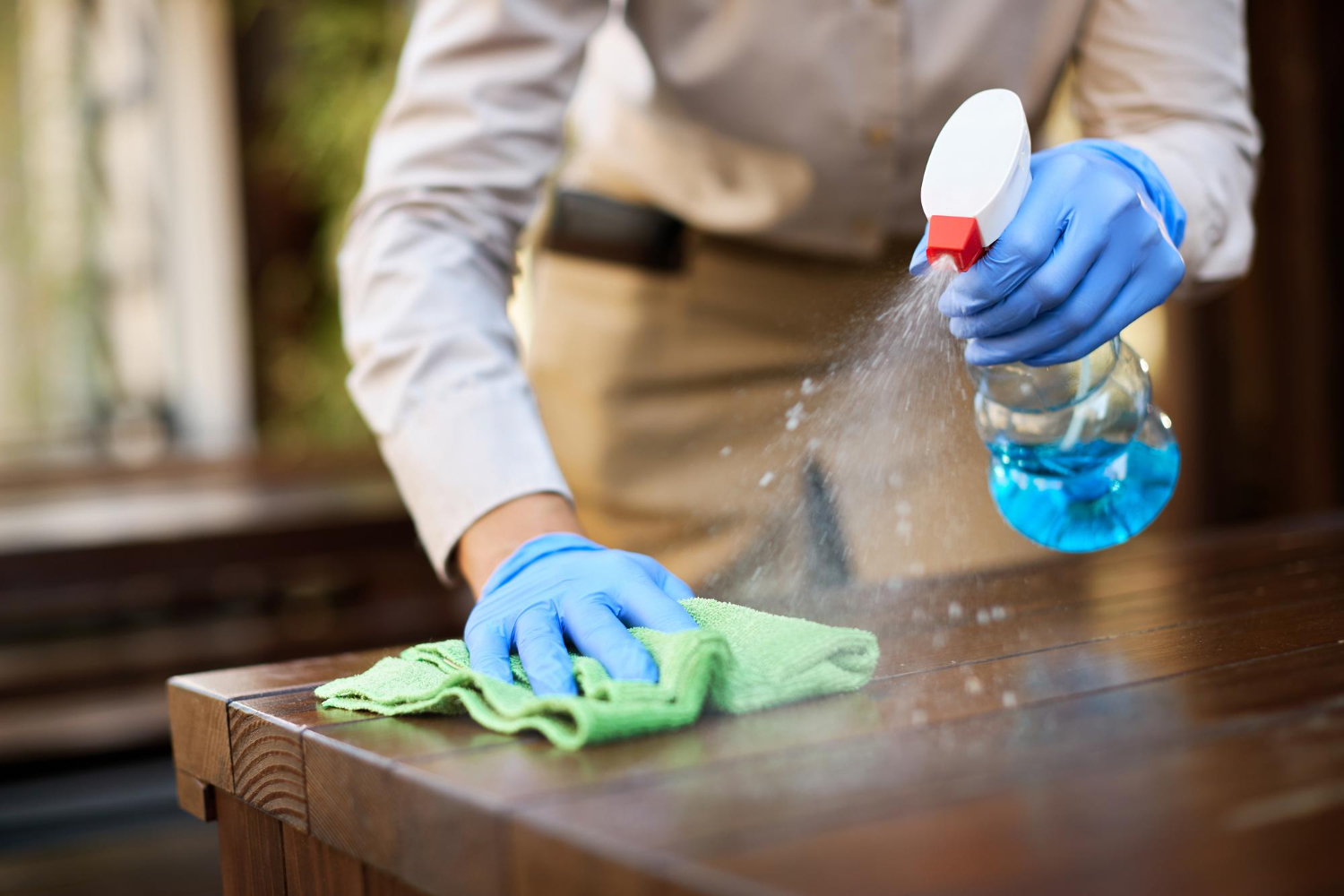
When it comes to cleaning your workspace, you may wonder about the effectiveness of different products. Disinfectant Wipes vs. Sprays has become a common debate among those aiming to maintain a germ-free environment. Understanding the differences can help you make the best choice for your home office.
Understanding the Hygiene Gap in the WFH Era
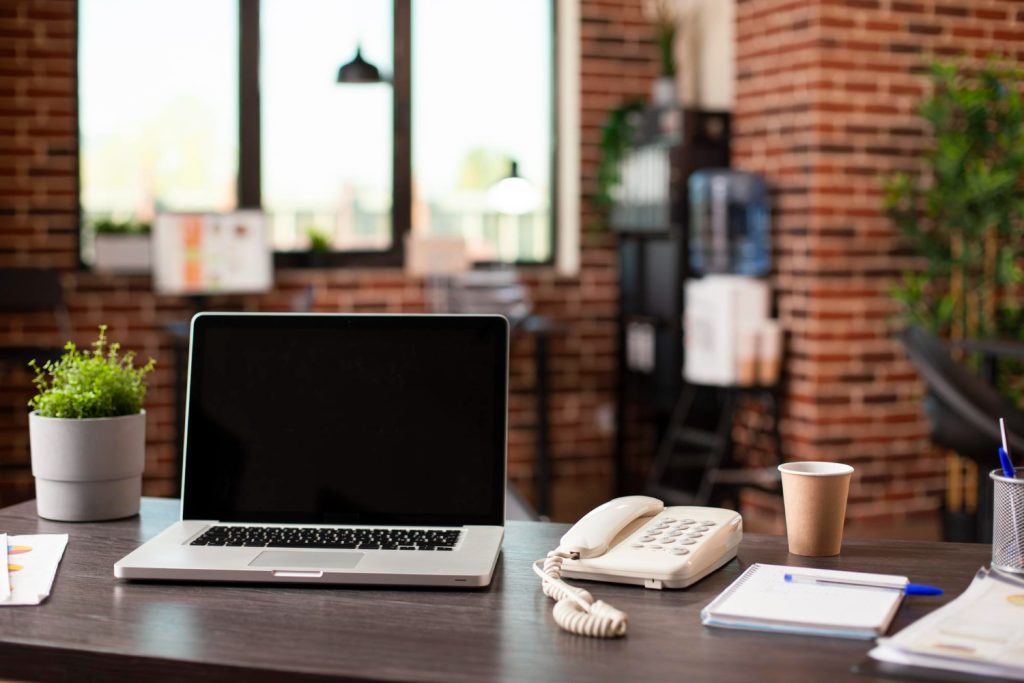
In a professional office building, cleaning crews often handle the general maintenance of the space. At home, that responsibility falls entirely on you. However, many Singaporeans are still using “kitchen-grade” cleaners for their “medical-grade” technology. This “hygiene gap” can lead to damaged equipment or, worse, a cycle of recurring illnesses within the household. To close this gap, we must choose the right disinfection tools: sprays or wipes.
The Accumulation of Germs on Shared and Personal Devices
Think about your daily routine. You might use your laptop at a cafe in Orchard, then bring it home to your desk. You touch your phone hundreds of times a day. If you share your home office with a spouse or if your children use your tablet for home-based learning, the risk of cross-contamination skyrockets. Without a targeted disinfection strategy, your desk becomes a bridge for germs to travel from the outside world into your private life.
Disinfectant Sprays: The Pros and Cons of Aerosol Solutions
Disinfectant sprays have been a household staple for decades. They are designed to cover large areas quickly, making them popular for floors or countertops. But are they suitable for a desk filled with sensitive electronics?
High Coverage but Low Precision
The primary advantage of a spray is its ability to reach wide areas. However, in a home office, precision is often more important than coverage. When you use a spray, the mist can be inconsistent. Some areas receive too much liquid, while others remain dry and untreated.
The Risk of Inhalation and Overspray on Electronics
The biggest drawback of sprays in a confined office space is the risk of inhalation. Aerosolized chemicals can irritate the lungs, especially if the room is air-conditioned and lacks fresh air circulation. Furthermore, “overspray” can be disastrous for electronics. Liquid droplets can seep into the delicate circuitry of your mechanical keyboard or the charging ports of your laptop, leading to expensive repairs or permanent damage.
Disinfectant Wipes: The Power of Mechanical Removal
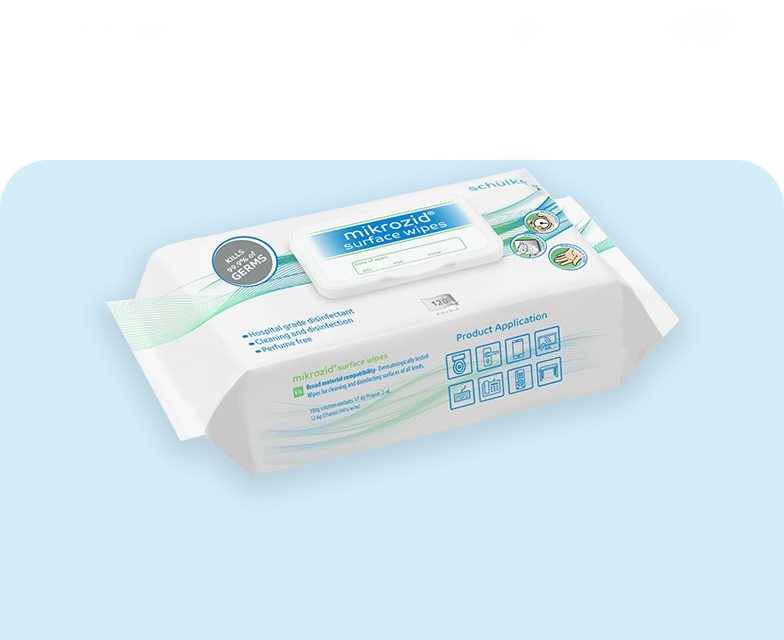
This brings us to the modern alternative: pre-saturated disinfectant wipes. In medical settings, wipes are the preferred method for disinfecting non-invasive medical devices, and for good reason.
Precision Cleaning for Sensitive Surfaces
Wipes offer a level of control that sprays simply cannot match. You can target specific high-touch areas—like the scroll wheel of your mouse or the power button on your monitor—without worrying about affecting the surrounding equipment. The wipe acts as a carrier, delivering exactly the right amount of disinfectant to the surface.
Ensuring the Correct “Contact Time” for Maximum Efficacy
Disinfection is not instantaneous; it requires “contact time.” For a disinfectant to kill 99.9% of germs, the surface must remain wet for a specific period (often 30 to 60 seconds). Wipes are engineered to leave a thin, even film of liquid that stays on the surface just long enough to achieve full efficacy before evaporating cleanly.
4 Critical Factors to Consider for Your Home Office Hygiene
1. Material Compatibility: Protecting Your Expensive Tech
Many common household sprays contain high concentrations of alcohol or bleach that can strip the protective coatings off your screens or cause plastic to become brittle over time. Professional-grade wipes are often formulated to be “sensitive,” ensuring they kill germs without damaging your investment.
2. Convenience and Portability in a Busy Schedule
In the fast-paced rhythm of Singaporean life, convenience is king. A tub of wipes on your desk makes it easy to perform a “30-second reset” between meetings. There is no need for paper towels or multiple bottles; just pull, wipe, and dispose.
3. Efficacy Against Local Pathogens (Flu, HFMD, and More)
Your choice of disinfectant must be effective against the threats we face locally. In Singapore, this includes the common flu, stomach viruses, and the highly contagious HFMD. Look for products with broad-spectrum antimicrobial properties that are trusted by healthcare professionals.
4. Environmental Impact and Residue Management
A good disinfectant should leave no sticky residue behind. Sprays often leave a “film” that can actually attract more dust and grime. High-quality wipes evaporate cleanly, leaving your desk feeling fresh and smooth.
Managing Dust and Humidity at Your Desk
Singapore’s tropical climate adds another layer of complexity. High humidity can make the oils from our skin “stick” to our devices more readily, creating a layer of grime that bacteria love.
Why Tropical Climates Accelerate Bacterial Growth on Keyboards
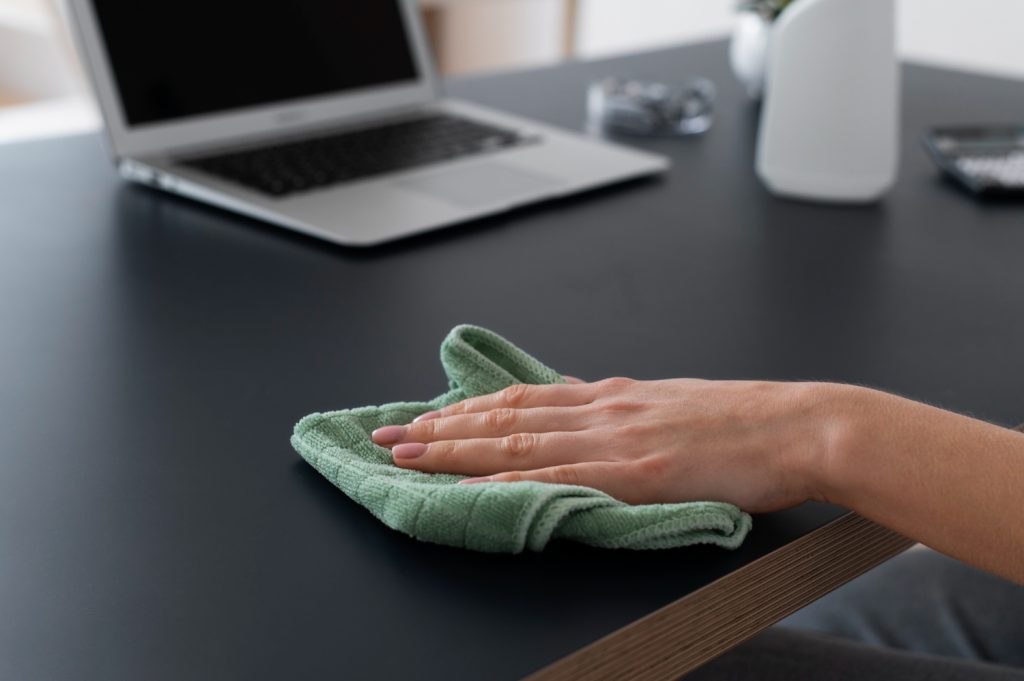
Our keyboards are essentially “skin cell collectors.” In a humid environment, these skin cells, combined with sweat, provide a perfect food source for bacteria. This is why a simple “dusting” is not enough; you need the mechanical action of a wipe to break down that biofilm and truly disinfect the surface.
Making the Professional Choice: Why Wipes Win for Electronics
When we weigh the options, wipes emerge as the clear winner for the modern home office. They provide the precision, safety, and efficacy required to protect both your health and your technology. But not all wipes are the same.
Choosing the Right Medical-Grade Formulation
If you are looking for a wipe that is safe for delicate surfaces like smartphones and tablets but still offers hospital-grade protection, you need to look beyond the supermarket shelf. You need a solution that is alcohol-free and dermatologically tested.
Transitioning to Specialized Protection
Choosing the right tool is the first step toward a healthier workspace. If you’re looking for a wipe that’s safe for sensitive electronics and medical-grade, read [Mikrozid® Sensitive Wipes: The Professional Choice for Singaporean Households] to see how the experts protect their equipment.
Investing in a Healthier, More Productive Workspace
Your home office is an extension of your professional life and a part of your private sanctuary. By choosing disinfectant wipes over traditional sprays, you are opting for a smarter, safer, and more effective way to manage your environment. Don’t let your desk become a hidden hazard. Take thirty seconds each morning to wipe down your high-touch surfaces. It is a small investment in your health that pays dividends in productivity, peace of mind, and a workspace that truly supports your best work.