



The Playground Dilemma
It is a scene every Singaporean parent knows all too well. You are enjoying a sunny afternoon at the Admiralty Park slides or the Coastal PlayGrove when a sudden trip results in a scraped knee and a burst of tears. Your immediate instinct is to protect the wound from infection. You reach into your bag, but what are you pulling out? For decades, the “brown bottle” of iodine was the universal symbol of first aid. But as medical science has advanced into 2026, many parents are asking: Is that old-fashioned sting actually necessary?
Why First Aid Choices Matter for Kids
Choosing the right antiseptic for a child is about more than just killing germs. It is about the psychological impact of the treatment and the biological speed of recovery. If the treatment hurts as much as the injury, children develop a fear of first aid. Furthermore, some traditional antiseptics can actually slow down the very healing process they are meant to support. In this guide, we will compare the traditional povidone-iodine against modern antiseptic sprays to see which truly deserves a spot in your family’s go-bag.
The Traditional Choice: Understanding Povidone-Iodine
Povidone-iodine has been a staple in medicine since the mid-20th century. It is a powerful antimicrobial agent that releases iodine slowly to kill a wide range of pathogens. Most of us recognize it by its distinct deep brown color and medicinal smell.
How Iodine Works as an Antiseptic
Iodine works by penetrating the cell walls of microorganisms and oxidizing their proteins and nucleic acids. It is undeniably effective at killing bacteria. This is why it is still used in many surgical settings where a sterile field is required. However, what is good for a controlled operating theater isn’t always best for a child’s scraped elbow.
The Drawbacks: Staining and Tissue Toxicity
The most obvious downside to iodine is the mess. It stains clothes, skin, and furniture—often permanently. More importantly, clinical studies have shown that iodine can be “cytotoxic” to healthy human cells. This means it doesn’t just kill the bacteria; it can also damage the delicate new skin cells trying to knit the wound back together. This can lead to a longer healing time and a higher chance of visible scarring.
The Modern Alternative: The Rise of Antiseptic Sprays
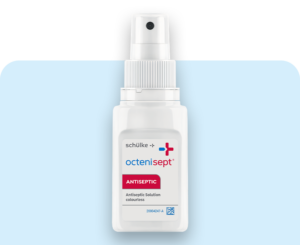
In recent years, modern antiseptic sprays have largely replaced iodine in pediatric first aid kits. These sprays, often based on active ingredients like octenidine, offer a completely different experience for both the parent and the child.
Why “No-Sting” is a Game Changer for Parents
Have you ever tried to apply a stinging liquid to a screaming toddler? It is an exercise in frustration. Modern sprays are designed to be “no-sting.” They achieve high levels of disinfection without the painful burning sensation associated with alcohol or iodine. This turns a traumatic medical moment into a calm, manageable step in the healing process.
Comparing Efficacy: Which One Kills Germs Better?
A common myth is that “if it doesn’t sting, it isn’t working.” This couldn’t be further from the truth. Modern antiseptic sprays are often just as effective, if not more so, than traditional iodine.
Broad-Spectrum Protection: Bacteria, Fungi, and Viruses
Ingredients like octenidine provide broad-spectrum protection. They are effective against Gram-positive and Gram-negative bacteria, as well as fungi and certain viruses. Unlike iodine, which can be neutralized by blood or “wound gunk,” these modern sprays maintain their efficacy even in the presence of organic matter.
4 Reasons Why Sprays are Replacing Iodine in Modern First Aid
1. Pain-Free Application and Child Cooperation
When a treatment is painless, children are more likely to cooperate. This allows you to thoroughly clean and disinfect the wound without a struggle, ensuring that no hidden dirt or bacteria remain.
2. Visibility and Wound Monitoring
Iodine’s dark brown color masks the wound. It makes it difficult to see if the area is becoming infected (spreading redness) or if it is healing normally. Modern sprays are typically colorless, allowing you to monitor the wound’s progress with a clear view.
3. Faster Healing and Tissue Compatibility
Because modern sprays are not cytotoxic, they do not kill the “good” cells. This supports the body’s natural repair mechanisms, leading to faster re-epithelialization and a lower risk of scarring.
4. Convenience for Active Singaporean Families
A spray bottle is easier to use on the go. There are no cotton balls or applicators required—just a quick spritz and you are done. This is perfect for the fast-paced lifestyle of Singaporean families who are always on the move.
The Safety Profile: Iodine Allergies and Thyroid Concerns
Beyond the sting and the stain, there are deeper safety concerns with iodine. Some individuals have a genuine allergy to povidone-iodine, which can cause skin rashes or even anaphylaxis in rare cases.
Why Infants and Pregnant Women Need Caution with Iodine
Iodine can be absorbed through the skin and enter the bloodstream. For infants, whose skin is thinner and more permeable, or for pregnant and breastfeeding women, excessive iodine absorption can potentially interfere with thyroid function. Modern antiseptic sprays do not carry these systemic risks, making them a safer choice for the most vulnerable members of your family.

The Singaporean Context: Outdoor Play and High-Risk Environments
In Singapore, our children play in high-density, high-humidity environments. Whether it is the damp sand at East Coast Park or the communal equipment at a neighborhood HDB playground, the risk of picking up a “staph” or “strep” infection from a minor scrape is real.
Dealing with Scrapes at Admiralty Park and Coastal PlayGrove
The humidity in Singapore can make wounds stay moist for longer, which is good for healing but also good for bacteria. You need an antiseptic that stays active without irritating the skin. For a deeper look at a specific ‘no-sting’ solution used by hospitals, see [Why Octenisept® is the Gold Standard for Pain-Free Wound Care in Singapore].
Making the Professional Choice: Why Hospitals are Switching
If you visit a pediatric ward in a Singaporean hospital today, you are much more likely to see a colorless spray than a brown bottle of iodine. Medical professionals have recognized that patient comfort and tissue safety are paramount. By using the same tools that doctors use, you are bringing hospital-grade care into your own home.
Prioritizing Comfort and Clinical Efficacy
In the battle of Antiseptic Spray vs. Iodine, the winner for modern parents is clear. While iodine served us well in the past, the “no-sting,” colorless, and tissue-friendly nature of modern sprays makes them the superior choice for children. Why settle for a painful, staining relic of the past when you can provide your child with a painless, scientifically advanced recovery? Keep the brown bottles for the history books and put a medical-grade antiseptic spray in your first aid kit today.